Tuesday, May 17, 2016

Back to the civilisation

or a story about the clash between real and fake Fiji

After two weeks spent in Ovalau and Calaqai the time has come to return to the main island. Two weeks of exploring Fijan villages, listening to the stories of local residents and discovering about the effects of the cyclone let us experience the real taste of the islands.

Far away from noise and typical touristy and commercial areas we found our little oasis among the local people and beautiful nature.


But all good things come to an end and we had to leave Calaqai and Ovalau to appear in Suva again. The first few hours in a city were difficult, noisy, with too many stimuli, too many colours, too many sounds and too many people. So we run away again. This time to the nearby Forest Park to walk through the rainforest which hosts chilly and soothing waterfalls.

Our escape didn't last long and soon we were on the bus to Nadi to be disappointed even more.

What was a peaceful backpackers' hideaway two weeks before became now an overcrowded and loud tourist hub. One night spent here was enough to make us suffer from a withdrawal syndrome. At all costs we wanted to come back to our friendly villages.


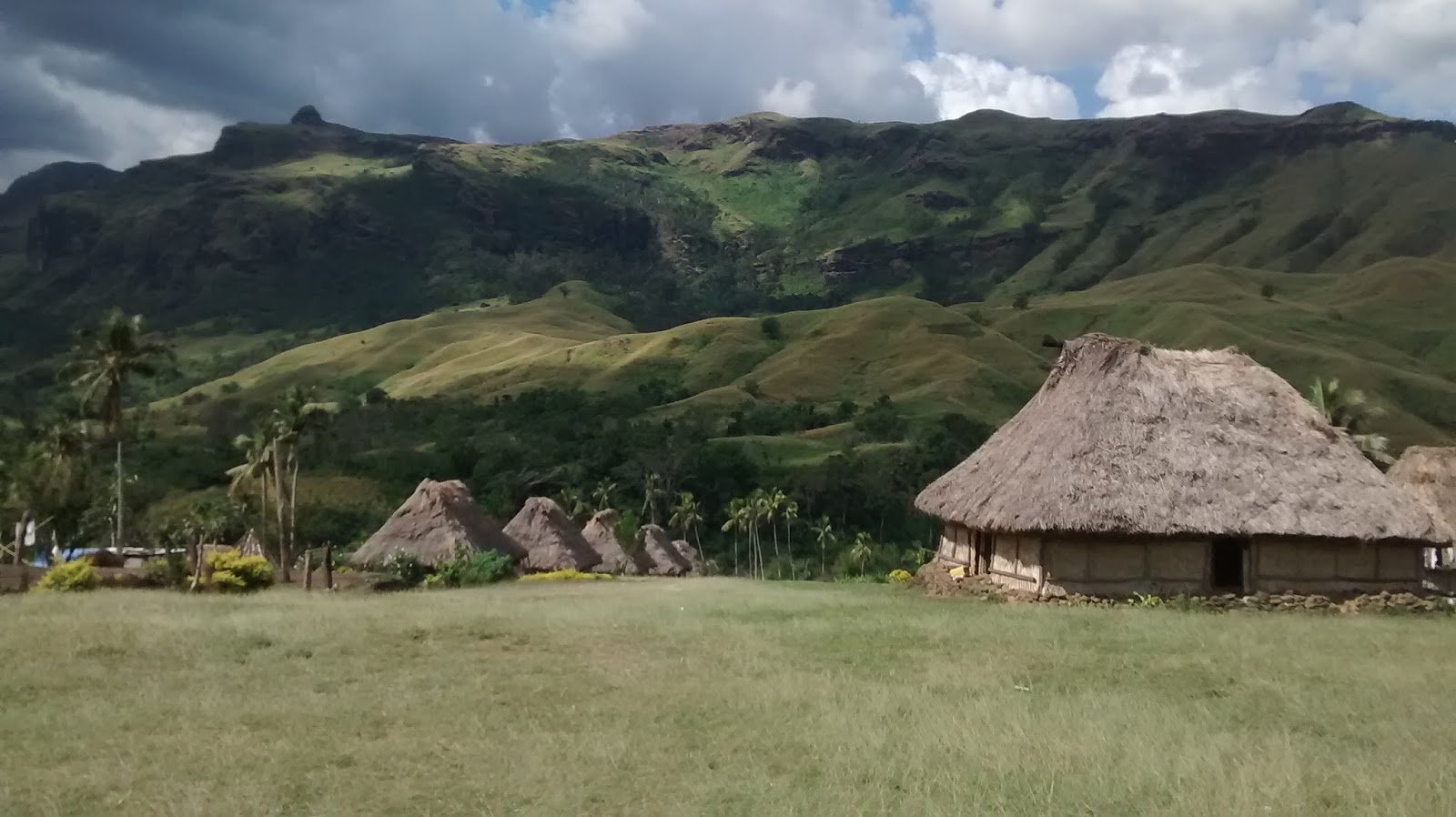
Instead, we went to Navala. A very traditional Fijan village hidden in the mountains. There are no bus connections from Nadi to Navala and the only way to get there is by bus to Ba and then by a taxi, which takes ages and is difficult to handle in one day. Luckily, we  found a driver who took us all the way to Navala and back.

The village of Navala was built in the mountains some 60 years ago. The houses are made of bamboo in the plan of cross. There's  no electricity and no running water inside. Water is supplied from the mountains, gathered in a big container that is connected to pipes distributing the water to little taps and shower cubes located on the yards. The village is a home to about 200 residents and hosts one primary school. Other schools, as well as hospitals and shops are in Ba, the nearest town, about 40 minutes drive away from the village.

The area is very picturesque and the houses do look unique. But as a tourist attraction Navala is overrated, because... It has become a tourist attraction.

You need to pay an entry fee (25 dollars) and a guide fee (10 dollars). If you're lucky, you will be assigned a knowledgeable, English speaking guide. Otherwise you'll end up like us, with a boring guide who didn't explain much, was quite distant and talked to us in broken English and only if we asked questions. We got to drink local kava in a newly built house. During our visit there were no other visitors and the residents disappeared inside their bures, hiding away from the heat or strangers.

Only children were playing outside in a big rugby field.

 I'm glad we got to see the authentic Fijan villages before coming here. Villages, where people are nice because they are happy to see you, not because they are paid. Villages, where you don't have to pay any entry fee and you can watch the local life and talk to the residents as much as you want to. A pure Fijan hospitality that shines and glows in spite of the ruined houses, knocked over trees and broken electricity lines.

Friday, May 13, 2016

Peace and serenity


or a story about a tiny little island in the middle of nowhere...

Far away from noisy streets, commercial tourists areas, with limited access to water and electricity, surrounded by lush and wild plants, blue water and soft sandy beaches - this is our wild oasis in the middle of nowhere.

It was love at first sight. So strong that it was difficult to leave it behind. We were already packed and had our boat transfer arranged when we changed our plans this morning and decided to stay here one night more. You can't simply leave such a beautiful and serene place.


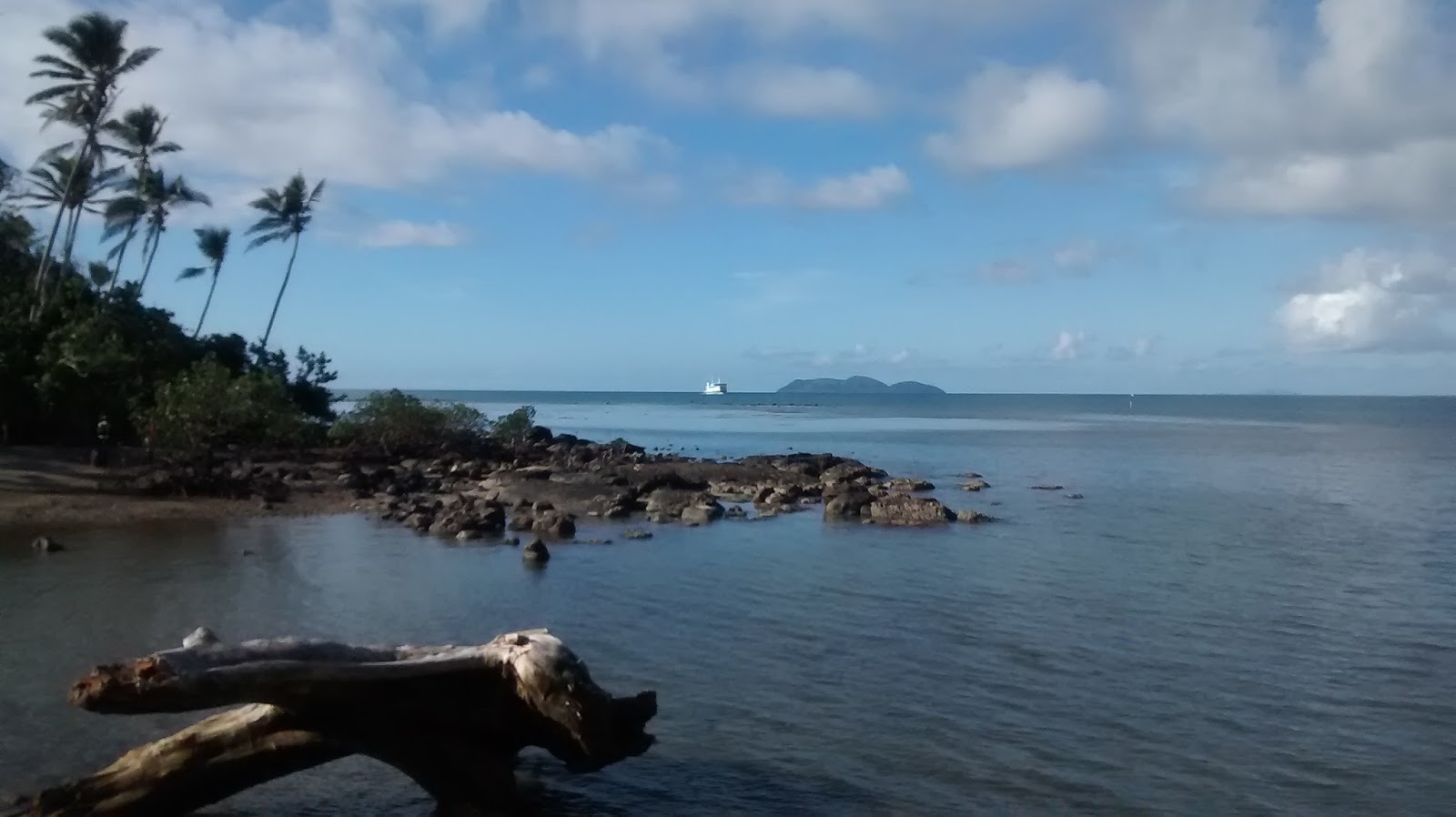
Calaqai is a tiny little island, about 40 minutes by boat from Levuka. It takes only 15 minutes to walk around it and it never ceases to amaze us. Our bure overlooks an even smaller Snake Island, which can be reached... on foot in the low tide. Right on the beach with the perfect spot to watch the sunrise - our bamboo bungalow is located in the best part of the island.

And the best thing about it? We are the only tourists here! There are some volunteers living here with the mission to help the local community from the neighbouring islands and village of Moturiki. They also help to preserve the nature and repair the damages caused the cyclone. A few residents of the nearby islands stay and work here from time to time, in the evenings you can hear them laughing and talking in the traditional kava circle.


We joined the kava session too. A local dive master told us this is the best kava in Fiji. Each of the 14 regions has a different way of preparing this tongue numbing drink, the taste varies as well. You can use the kava root and grind it or choose the easier way and buy kava powder. Then you need a big bowl filled with water. Add some kava powder to a small linen bag, sink it in the bowl and move around. Soon the mixture will be ready. Take a little coconut shell or any other cup made of natural materials, sunk it in the big bowl to fill it with some kava and pass it around. Before drinking you need to clap once and say 'bula' to show respect to the host. You drink the whole cup whether you like it or not, and pass it back to the host. Now - depending on the region - the host, everyone or just the drinker claps three times. Then the next person in the circle gets to drink the muddy liquid. And so it goes, for hours and hours, until everyone is fully relaxed and numb. This local and natural alternative to alcohol brings together people of different ages and backgrounds. Kava sessions are all about socialising and sharing stories rather than drinking.

And the island turns around wildlife, peace and harmony. It is surrounded by a beautiful coral reef with plenty of colourful fish. We watch them everyday while snorkeling and exploring the underwater world.

The island was hit by the cyclone, although not us much as Ovalau. The birds are all gone and many trees landed on the ground. The hills of the neighbouring islands lost their lush green plants and crops.

Soldiers from Australia and New Zealand that came to Fiji to help out after the cyclone described the landscape of many islands, towns and villages as a war zone.

It's a shame that thousands of tourists come to Fiji to stay on privately owned islands paying as much as 7000 USD per night without even experiencing the real Fijan life, without looking at the devastated houses and torn villages plunged into darkness. Luxurious resorts are all worth nothing if they don't serve local communities. Especially in times like this, right after the biggest natural catastrophe this region has ever experienced.

We keep finding out about the effects of the cyclone every day. Someone just told us there are no bananas in Fiji anymore as most of the banana trees were damaged in the hurricane. In some regions it's difficult to get fresh fruit and vegetables, which we have already experienced.

To explore more about the life after this fierce catastrophe we're staying away from commercial and tourist zones, far away from fake resorts and glittering attractions. That's why we extended our stay on Calaqai. Closer to nature, local people and their real stories, we're trying to grasp the secrets of Fijan perseverance and contentment.


Wednesday, May 11, 2016

Waterfall and joyful kids


or about villages around Levuka...

Life in a Fijan village is simple, yet difficult. To enter or walk through the village you new to ask for permission which is usually granted by a village chief. The best strategy is to bring some kava as well, so that the chief and residents could prepare their traditional tongue numbing beverage.

We walked along villages near Levuka, watching small houses made of wood and metal, looking at children playing by the coast or on a little rugby field, often barefoot or in torn clothes, but always happy and helpful.

Searching for a waterfall, we met a group of curious kids, the youngest aged 6, the oldest about 14. They guided us through their village, into a rainforest, through rocks and lush plants. They were running through the rocky path skilfully, barefoot and confident. We followed them carefully, equipped in hiking shoes and a mosquito repellent.

The real show started once we reached the waterfall. Our kids, 2 boys and 5 girls, run off to jump into a little and quite shallow pool. High from a  rock, just above the waterfall. In their colorfoul clothes and huge smiles, they climbed higher and higher. And encouraged us to do the same.

Finally we followed them too. We weren't brave enough to jump, instead we chose to swim and play with the kids. We tried to teach them how to take pictures, which they fully enjoyed. They told us that it was their last day of holiday and the following day they had to be back at school. Their parents didn't mind them jumping and swimming in the waterfall, they were at work, they wouldn't even know. Only one girl from this group lost her house in the cyclone, the rest still had a safe place to live.

We came back on the following day to visit our little friends. This time it was difficult to find them playing outside. Other kids quickly joined us and showed a house of the youngest girls. Shy and hesitant at first, they finally recognised us and accepted a little sweet surprise we left for them.

                    The village of Rukuruku

Searching for the taste of local villagers' life we also visited Rukuruku. A big yellow pickup took us there from Levuka. The truck quickly filled in with the residents of Rukuruku who come to Levuka once per week for their big grocery.

We found ourselves squeezed between women in colorfoul dresses, with their babies on one lap and bags full of bread and sweets on the other one. Boxes with instant soups and breakfast crackers landed on the floor, along with bottles with fizzy drinks and yellow or white petrol cans. The truck stopped first at the local petrol station to fill in all the cans of passangers and their relatives. A plastic foil wrapped around the bottle neck served as a seal. This protection wasn't strong enough as some liquid spilled on the truck floor. But that was not a problem at all, a piece of cardboard landed on the stain and we could finally move towards Rukuruku, uphill, on a rocky road.

The village of Rukuruku


What seemed to me to be a poor shop supply in Levuka, turns out to be the only and most welcomed variety for the residents of this tiny island. A trip from Rukuruku to Levuka for snacks, bread, some veggies (mainly potatoes), flour and petrol is a big event that takes half a day. The truck goes to Levuka only 3 days per week in the morning and after a few hours comes back again.

There are no shops in the village, only a primary school and a car repair. The houses, partly damaged in the hurricane, stretch along an unpaved road. A couple of blue tents pitched on a hill overlook the village. It's the base of UNICEF which tries to help the local community as much as they can.

Our visit to Rukuruku was very short as we had to catch the last transport back to Levuka. But it's enough to realise that still a lot of work and support is needed here. The government plans to repair broken electricity lines in August. The cyclone devastated the island 3 months ago, in February, and it still looks as if it happened only a week ago.


Monday, May 9, 2016

All the colours of the world

or about our little voyage into the wild...

Levuka, the old Fijan capital, is full of colours and surprises. The town that is inhabited only by about one thousand people hasn't changed much since the 19th century when the European settlers came here for the first time.

Little colourful houses stretch along the main street built by the sea shore.

Colorfoul are also Fijan money with images of birds, flowers and insects.

Colorfoul are traditional and casual outfits worn by the local people. Today in the church we could experience the whole range of colours, sounds and emotions.

What stroke me the most was that the local church goers take out their shoes before entering the building. Finally I could find in a catholic church one of my most favourite rituals that is so characteristic for the mosques and hindu temples around the world.

People here sit down on the floor covered with mats made of dry grass. Everyone wears their best clothes: men put on their traditional black or navy blue skirt with a flowery shirts, women wear tunics and long dresses in bright, happy colours. Mothers bring their little children, cheerful songs and guitar music fill in the colorfoul wooden house and everyone celebrates the mass respectfully.

There's so much one can learn from these simple and loveable people from the other side of the world. Their warm hearts, hospitality and happy souls are the real treasure of the island.


On our way through the town we met local firemen. They invited us to their simple building, showed how they work and live. They told us that most of the crew members were sent here from Suva, not only to deal with fires but also to teach local people how to prevent danger. Their typical shift lasts 24 to 48 hours. They drive around the island, visit people's houses and explain how to stay away from fires. They also had a lot of work in February when the whole island was seriously damaged by the biggest cyclone in Fijan history.

On the way to Levuka after the sunset we saw villages plunged into darkness. The hurricane broke off electricity lines, destroyed houses and knocked over the trees. But the real scale of the catastrophe was to be revealed in the day light.

Many families lost everything. Houses, cars, animals and hope. But they keep singing and praying, waiting for help and better times.

Some families received support from the government: big white tents that serve as a temporary housing. All villages around Levuka look similar: torn houses, white tents in the yard, colourful laundry lines and children playing carelessly outside.

Luckily, the government provides money to the affected families, although in some cases the funds are not spent properly. I've heard that some people from nearby villages buy extra food, toys or gadgets instead of investing in their households.

Another curiosity: there are about 20 shrines in Levuka. Catholic, methodist and pentacostal church, a  hindu temple, synagogue and a mosque...

Every time European sailors arrived to the old harbour in Levuka they brought their churches and religions with them. Many different nations tried to settle here, so all the influences are still clearly visible. A town inhabited by about 1000 people has a huge choice when it comes to the spiritual needs.

But not so when it comes to the nutritional needs. Local shops sell mainly goods that can be stored for a long time: cans, instant soups, nuts, cookies. The island of Ovalau is not well catered for, all healthy products stay on the main island, veggies and fruit are scarce, the crops were destroyed by the cyclone. Some shops sell fresh bread and fish, but only for a limited time. Local kids, including toddlers, consume endless quantities of colourful fizzy drinks and salty snacks. And this is probably why they are always so active and dynamic.

More stories about joyful kids from the nearby villages in the next post.

Saturday, May 7, 2016

Bula!


Or about a big little island on the other end of the world...

(Polska wersja tutaj)

Bula here, bula there, bula everywhere!
Bula is a Fijan hello/welcome/good morning and so much more! It's the essence of local hospitality, it's a warm smile shared with strangers and tourists, it's the easiest way to strike up a conversation.


Although I arrived to Fiji only 3 days ago, I could already experience how helpful and kind the local residents are. When we get lost or are unsure about the direction,  there's always someone to show us the way. We don't even have to ask for help. They look into our tired eyes and confused mind and immediately ask where are we heading and try to help. Very often random strangers walk with us for a few hundred metres to make sure we arrive safely at the destination. And they don't do it for money or for the sake of showing some great local products or rooms for rent, which was usually the case in Morocco or India. They just do if out of the urgent need to help. To me Fiji is an updated version of India and a smother edition of Morocco.

After arriving to Nadi and meeting Magda who's on the trip around the world, we headed towards Suva to find our way to another island. Nadi doesn't have much to offer, apart from a colorfoul Hindu temple and a few resorts. We stayed in a Bamboo Hostel, a great place for backpackers, right on the beach. The journey by bus to Suva took about 4 hours. There were no more ferries that day to Ovalau, so we were forced to stay in the capital overnight.

And we didn't like it at all.

Busy, dark and empty after sunset. Noisy like an Indian city, with honking cars and loud music.

I felt relieved once we finally got on the bus towards Levuka. We were the only tourists there, squeezed among many happy Fijan faces. The journey that was supposed to take 1,5 hours took on a Fijan dimension and lasted 3 hours. And then the long wait for a ferry, which was supposed to leave within 15 minutes and left after over 1 hour. The Fijan time has its own rules.

On a ferry we met Abbi, a Fijan soldier working for the UN. He just got back from Syria and was selling Iraqi perfumes on the board. He comes from a little village next to the Ovalau island. His family house was destroyed in the cyclone last February when he was serving his duty abroad. Abbi managed to rebuild it and can now spend a peaceful time on Fiji before leaving to the army again.

I also met a woman who emigrated from Suva to Sydney. She claims that the government doesn't support the residents in need: there are no social benefits, and no many days off except of the national holidays. About 25% of population lives below the poverty level and the prices in shops are comparable to those in Western Europe.

European are also influences and history on the little island of Ovalau, where we arrived a few hours ago. You can read more about this unique place in the next post.

Tuesday, May 3, 2016

How to survive without work?


There we go! The journey has just started. It's the first time since 5 years when I'm travelling without work. No laptop, no work to do while waiting at the airports or on the plane. It feels a bit strange. Suddenly there's so much time on my hands...

I guess this trip will go to the category "workaholic rehab".

I'm on the airport in Amsterdam, waiting for my first flight to Abu Dhabi. I found myself surrended by Chinese and Malaysian passengers consuming their instant soups and other little dishes, highly flavoured and induced with chemicals. Well, I will stick to my apple, I guess.


Sunday, May 1, 2016

Really, 4 years without a post?
(polska wersja: tutaj)


Four years in the cyber world seems like eternity. Well, let it be then. I haven’t posted anything for eternity. Not because I didn’t travel in that time. Quite the contrary.

Somehow my life took on another dimension and the student-hippie-happie-go-lucky travels transformed into business-and-family-must-see-and-must-do travels. Don’t get me wrong. I did enjoy my multiple trips to Poland, Morocco, UK, Germany, Netherlands, Spain, USA, Czech Republic, Greece, Belgium, Luxembourg, France or Ireland, but there was no time and no inspiration to write about it. My writing muse changed its course and moved to business related blogs and articles, pushing the travel adventures to the background.

But now the time has come to revive the initial enthusiasm and put new life into the blog! So, there we go! The final countdown has just begun. The next big journey starts in… 2 days!


Stay tuned for more details!

Tuesday, February 28, 2012

Herrenchiemsee


or the second part of the forgotten journey…


We stayed 4 days at our friends’ place in Glonn and apart of Munich and their village we also managed to see an island called Herreninsel at the lake Chiemsee. You can reach the island only by boat, e.g. from a harbor in Prien. And that’s what we did. But because it was a sunny Sunday, many other people did the same and the place didn’t seem to be as welcoming as it would be otherwise.


After about half an hour in which we watched the peaceful water surface, clear sky and occasional boats, we finally reached the land to discover a copy of Versailles built by the King Ludwig II of Bavaria. The castle was surrounded by trimmed greenery, singing birds, colorful leaves. The sunny autumn weather decorated grey sculptures around the castles and made them look more distinguished. A stone lion really looked alive (at least to our friends’ son) and surrounding mythical characters seemed to invite to dance (at least to some people turning around Apollo’s feet).


Unfortunately, we had no time to visit the nearby island Fraueninsel, which is said to be less attractive anyway. But we hope to come back there one day to enjoy Bavarian nature, hospitality and delicious food again.       

Around Munich


or a few words about the forgotten journey…


Finally I’ve reached it! Not during Oktoberfest and not as a central point of my journey, but I’ve reached it. By train from Vienna, where I had finally received my MA diploma, just after a weekend in Poland, where we came from Holland for 2 days…

It was late evening in October when we arrived to Glonn, nearby Munich, where Yassine’s friends hosted us for a few days. And that’s where a story full of beautiful nature, hospitality and unique attractions begins.


Glonn is an unusual place, especially its forest which is a home to a small lake with wooden bridge ideal for photo sessions. It’s calm, empty, sometimes visited by enthusiastic joggers or dog owners. After a few minute walk through the forest you can arrive to another astonishing place, called Hermannsdorf. It’s a huge ecological farm, where everyone can enter for free, watch animals living in huge green areas and ecological fields, walk around wooden farm buildings, taste fresh cheese, meat, beer. You can also organise a wedding in here… Actually, we came cross some wedding guests, when we were on the way to visit a group of dirty pigs. Ladies wearing high-heels and long dresses were absolutely fine with their squeaking and smelling company. Everyone felt good in here.
The farm caters for a lot of attractions for children that can watch many different animals, as long as they want to. That’s exactly what Lea’s and Youness’ son did, who was strongly attached to the sheep, then to the horses and cows and then to all other peculiarities met on the way.

Glonn hosts also an old monastery with a school and kindergarten towering on the hill. This peaceful place is administered by active nuns that constantly realise their new ideas for exploitation of the monastery buildings.

And all this is enriched with unrivalled taste of the local cheese, fresh ecological juice and the surprise birthday feast for Yassine prepared by our friends. On the very first day in the morning we were welcomed with an overwhelming colourful table filled with fresh croissants, handmade cake, cheese and other delicacies. Yum-yum!

Compared to all these attractions the glamour of Munich seems to fade away a bit, but it still remains in the centre of attention with its monumental buildings, castles, universities, sculptures and fountains. We spent most of our time in the English Garden from the 18th century which hosts a Chinese tower and a very cosy beer garden. Our tour through Munich somehow led form one warm place to another (metro, cafe, garden), as it got cold. Unless according to my two lovely Moroccans, because for me it was still bearable. That’s how we survived till the evening, when the night life began. As it was Yassine’s birthday we decided to take part in it and entered a huge club with 4 dancing floors with different kinds of music. I must admit it was not something we fully enjoyed, but it was interesting in a way to watch different kinds of behaviour on the dance floor and around after we had enough of dancing and moving around.     
And after two days we had no choice but to say our goodbyes to Lea, Youness and their son and get on another train. This time heading to Rotterdam, where we finished our 7-day-tour through 4 countriesJ


Tuesday, November 15, 2011

8.11.11 Farewell my dear sheep

or few words about the Sacrifice Day…


The Sacrifice Day begins with the muezzin’s prayer, which is louder and longer than usually. His voice is present in every house and on every street for about 1 hour from around 7.30 a.m. He announces that one of the most important Muslim holidays has just begun.

That’s what woke me up. And after a while I witnessed death of two animals: my sheep and the cow, which I didn’t like, because it kept on bullying the sheep.

Since the early morning many butchers appeared in the districts of Marrakesh, walking, shouting and offering their services. When one of them approached our house, Yassine and his father called him to come up to the roof-terrace, where the whole sacrifice process usually takes place. A fat guy in wellingtons with military pattern and his young assistant (a boy, about 15 years old) in similar wellingtons and with a straw basket full of knives climbed up the stair to the roof, where the sheep tied to a metal column was already waiting for them. The butcher said a short prayer (actually one word: “bismillah” – in the name of God) and cut the sheep’s throat. My plan to save my sheep failed drastically…

First, the head is cut off. Then a piece of the leg is incised and through a little whole some air is blown into the dead victim. That was the assistant’s task and he used his mouth to fill the animal with air. In this way the skin moves away from the bones and it can be removed in one piece. Then the inner organs are sorted out – the heart, lungs, liver, brain, etc. The rest is hung on a special hook, which is mounted on every terrace wall. The muscles of the animal are not eaten on this day, only the inner organs. The body with muscles hangs upside down on the hooks till the next day, when the body is cut into parts and some pieces of it are given to the poor and relatives.

When the head is cut off, the terrace turns into a bloody river, covering all around with the royal red colour. Every terrace has water supply and outflow so the cleaning process is quick and easy.

Scarifying a cow takes much more time and a special butcher is needed. Ours was ordered a day before on a phone. He came 2 hours late, dressed in a ragged black jacket and dirty clothes. His eyes were green, to my surprise, and he made a rather scary impression, although I fund him a bit shy. His arms were covered with long scars and he had one scar on his scalp, as well. His waist was tied with a leather belt with 2 big knives attached to it. He entered the house with his skinny assistant and for about one hour he was demonstrating his professional skills. He killed two cows already before visiting us. It is not so easy to remove the cow’s skin in one piece, but he managed to do it in a perfect way. All the family, except of Yassine’s mother, was gathered around him to watch his butchery art and admire his professionalism.

The cow didn’t want to pass away quickly, so it was suffering for couple of minutes on the terrace floor. The butcher and his assistant were pouring cold water on its body. Again it was the head that was cut off as the first element. Then inner organs were taken out and the body was hung on two hooks. It’s still here and waits for the butcher who is supposed to come here again and cut the meat and sort it according to the body parts. The skin of both animals, sprinkled with salt, lies on the floor in the sun. It will be given to a poor lady. The walls are still covered with blood…

As I already said, on the Sacrifice Day only the inner organs of the animal are consumed. Grilled or smoked, with a lot of spices. Sometimes served with a sauce and eaten with handmade bread. I heard that the brain is the most delicious part, especially when served with garlic. I don’t know how it tastes. And I don’t want to know. I didn’t eat and I won’t eat any brain or any other part of any animals…

In the evening of the Sacrifice Day Moroccans go out to visit their families or friends or meet with them in a café. The same happens in the evening the day after, when the meat is already chopped, sorted and located in a special place…

And so, in the city bathed in the sunlight, all kinds of bleating and mooing suddenly disappear. The sellers of feed, pottery and coil leave the streets. Everything is back to normal.

Monday, November 14, 2011

6.11.11 Waiting for the big day

or about holiday preparation again…


Today a cow arrived to Yassine’s parents’ house. It inhabited the bathroom together with my sheep and was tied to the wall, so that it does not run away, in case the door (which is just a wooden board and an old satellite dish) is battered down. The animals live on the last, third floor of the house, so it was quite a challenge to drag them up the stairs. The cow is becoming fierce, takes over control in the bathroom, takes away the food of my sheep and pushes my sheep aside, back to the corner and doesn’t let it move. The poor sheep keeps on bleating and every now and then claims humbly its privileges.


On the streets there is another interesting phenomenon: special primitive stands with feed, vessels for meat preparation, coil or knife sharpener appeared in the middle-class or rich districts among beautiful houses or along crowded streets. Next to the stand there’s a small tent for the sellers who come here from nearby villages or poorest districts and stay here for 1 or 2 nights. All the products are placed before the tent, no one even hides them when it’s dark. A customer may appear any time during the day or night. And because nights are cold now, the fire lighten next to or even inside the tent is an indispensible part of the little camp.

In the well-off district people rather don’t dare to kill their animals by themselves or prepare some parts of the animals and take care of their skin. So the sellers stay outside until the Festival and smoke or grill sheep hooves or heads for them. To kill an animal the citizens hire butchers who walk between the houses early in the holiday morning, offering aloud their services. Inhabitants welcome them with joy, very often take them to their families who also need a butcher. It is also possible to phone a butcher a day before the festival, but this practice is not really common.

Poor families have to take care of everything with their own hands, from bringing an animal, to its sacrificing and preparing its meat, whether they’re brave enough to do it (especially sacrifice it) or not…

Sunday, November 13, 2011

6.11.11 My first sheep

or how I become an owner of a scared sheep…


Moroccan sheep madness still goes on. The Festival of Sacrifice is tomorrow, so it’s the last chance to buy an animal.

Since we arrived to Marrakesh I’ve been photographing all the sheep around me: on a terrace, on a street, in a carriage or in the center. I even made friends with a sheep of our neighbour, which is stuck on a terrace. Seeing my fascination with sheep, Yassine’s parents decided to buy me one, as well. They know I don’t eat meat, so I’m not going to consume my sheep after the sacrifice, but they just wanted to see my joy of having a sheep at home… Thus, for two days I became an owner of a little sheep.


The scared animal lives in a small bathroom near the terrace. It received a lot of food and pieces of cardboard to sleep on it. But it ignores the cardboard and stays on cold tiles. I’ve already photographed it (him! Him, him, him! It’s him!), talked with him, fed and I was already about to give him a name, when Yassine stated that’s not a good idea, because I will be emotionally connected with my sheep and then cry when he dies.


Tomorrow the sheep will be sacrificed, and all what’s left, will be just memories, pictures and his meat on other people’s plates. I keep visiting him and convince there’s no reason to be scared. The sacrifice is usually calm and peaceful, but I will write more about it tomorrow.

05.11.11 A sheep bleating in the morning

or how we land up in Marrakesh again…


In two days Muslims celebrate one of their two most important religious holidays – the Festival of Sacrifice. That’s how they commemorate the day when Abraham was about to sacrifice his son to God, but then a sheep was sent to him to sacrifice it instead of Ishmael.

Many people buy a sheep now to sacrifice it to God, prepare the meat in a traditional way and eat it with the whole family. But this is not so easy at all, because not everyone can afford to buy a sheep or other animal. And that’s what happens in Morocco:

The thinnest and poorest animal costs about 70-80 Euro. If you want to buy a sheep with good quality meat, you have to spend about 200 Euro. If you prefer another animal, e.g. a cow, with a low-cholesterol meat, you need to pay 500 Euro. And an average monthly salary in Morocco amounts to 500 Euro (although there are huge differences between income in villages and cities and between social classes). To save some money on the future victim, Moroccans are ready to travel far away to buy a cheaper sheep. Citizens of Marrakesh go often to Essaouira (about 90 km) and bring an animal from there. But not everyone can afford a cheaper animal, even from another city. Fortunately, the richer people share with the poorest and give them some parts of their animal. Or buy for them a new sheep. On the other side however, the richest families decide soemtimes to spend their holiday outside the country and spend the money on a journey, rather than on an animal and expensive festival.


Since few days sheep or (rarely) cows are transported on the streets of Marrakesh. They travel in a special carriage, barrow, motorcycle, bike or they are simply pulled on a string and forced to enter into a Moroccan house. Usually the animals don’t fight for their freedom, they follow humbly their new owner. They calmly accept their fate and finally end up on a roof, which is also a terrace of a house. That’s why in the first morning after we arrived to Marrakesh I was woke up not by the usual sound of birds but by a bleating sheep. We went up to the terrace of Yassine’s parents house to check how many new inhabitants there are on another roofs but we noticed just one sheep. More will come today.


Waiting for the sacrifice, sheep eat hay that can be bought now on many streets in the city, also in the center. Usually children are the sellers.

The meat of a sacrificed sheep is enough for the whole family for the next several weeks, depending on the size of the family and the sheep. And so, for example, Yassine’s closest family (3 people) will eat their cow even for the next 5 or 6 months and a family of our friend (8 people) will share their sheep for 2 months more.

During this holiday more animals are killed in the whole world than on any other day…

Monday, July 11, 2011

05.07.11 Waterfall family and natural invasion

or what happens with a beautiful nature during a hot weekend...

The Ourika Valley is a unique place. About 60 km from Marrakesh noble mountains dominate the landscape and hide 7 waterfalls. The routes are not marked, so if you want to see all the waterfalls you need to ask random people for the way, follow your intuition or hire a guide. We used the first two methods and reached 5 waterfalls. The first, most easy to access, was full of Moroccans who came here to escape the heat of the city, singing, playing in the water or just watching. After a short time we decided to escape form the invaded nature and seek peace in higher parts of the mountains, discovering more waterfalls. The further we went, the less people we met, and the last waterfall was for us only. The winding path followed along a river and stones and lead us to a peaceful wonder of the nature Far away form noisy shops and cafe by the entrance to the valley.


The Ourika Valley is especially adored among young couples. It's one of few places in the area, where lovers can spend some time alone. They can't meet their partners at home (according to the tradition), nor show their feeling in public places. So they seek for distant places, far from people. And one a strangers approaches a kissing couple, both of them become red, shy and turn their eyer from newcomers.

06.07.11 Milk, dates and cookies

or few words about Moroccan hospitality..

During the last 3 weeks in Morocco I visited many Moroccan houses and every time I could witness how welcoming and hospitable Moroccan people are. In Marrakesh Yassine's parents prepare for us delicious breakfasts, lunch and dinners (omelettes, rice, salads, fish, toasts, pasta....), which are definitely to huge for me. When we visited Yassine's grandmother, ill and old, she welcomed us with milk, dates and fresh bread. A visit in a house of Yassine's friend ended up with fresh meal also. The friend's parents, who were also hosting a family from the UK and Ireland, prepared for everyone Moroccan pancakes, handmade cookies, hot milk, dates and other specialities. And when the newly-weds (Yassine's cousin and her Pakistani husband) were visiting the closest family after the marriage (that's the tradition here) and came to Yassine's parents, they were welcomed with the traditional meal for a married couple (milk and dates) and many colourful cookies.

About the cookies – they are really unique! Without chocolate, but always very sweet, in many shapes and colours, sometimes with honey, almonds, sesame or colourful additives.

Coming back to the meal – when eating with more people, you eat your meal usually from one plate,taking the main meal with a piece of bread. This way, you usually end up eating more bread that a salad/meat/fish but no one really seems to care. Sometimes you drink from one glass, also. There are of course meals that are served on separate plates and families or situations where you have to use cutlery instead of your fingers. But sooner or later, at some time during the meal, the traditional way of consuming a meal appears.

Moroccan hospitality is not limited to food only. Very often a host will offer you his best room, someone will take you for a ride around his city with a car, someone will let you stay in his house for many days and someone will give you many presents, when you already have to leave the country. We are leaving tomorrow and we'll have too much luggage for sure, because we got many presents from Yassine's family. I got a Moroccan shoes and dress from his mother and two European dresses from his father, and both of us received a huge bag full of Moroccan spices, olives, cookies and other sweets.


It is really sad to leave such a hospitable country...

04.07.11. Stretchy time and helpful hand

or few words about Moroccan mentality...

In Morocco I'm spending my time mainly with Moroccans, meeting new people every day: Yassine's family or friends or random people that travel to the same places as we do. The time for Moroccans has a different meaning and a day has more hours. 15 minutes does not mean „15 minutes”, but 30 or 45. „Now” sometimes refers to „maybe in next hour or few more” and „tomorrow” may actually be in few days. In the last minute you realise there's not enough time and something should have been planned before. But the problem is, it is not possible to plan anything, because your friend may call you to meet you right now or you have to help your family or the weather is bad (which means „too hot”) or someone has some other idea. The time becomes stretchy. Plans do not exist. And everyone is fine with it.
Fortunately, there are situations where the time really has the proper meaning: the best trains and buses usually come on time, visits at doctors or business meeting may also be punctual. It's just the everyday life, when the time suddenly seems to slow down and stretch endlessly.

Taxis also have another meaning. In cities there are so called „small taxis” for maximum 4 people, and in small towns and villages you can meet „grand taxis” where even 10 people can fit into a car for 5. The front seat is usually taken by 2 passengers and no one complains that it's too crowded. Motorcycles work similar – very often 4 people fit in one motorcycle and families really don't need a car to travel together.

About families – the family has for Moroccans the highest priority. The older members of the family have to be supported by the younger and family meetings are very important. Family picknicks are also organised quite often. When it's hot, the pickniks start late in the evening, along the streets in the center (parks are too dark) . The houses are too hot, so fresh meal (tajin, melon, Moroccan tea...) can be eaten outside.

The next common Moroccan characteristic is being ready to help any time and anyone. When you are looking for some coins in your pocket while buying tickets, someone will offer you his 5 dirhams, when in crowded bus you can't find a seat, a man will give you his seat (if you're a woman), when you need Internet connection and the only Internet Cafe in the village has no electricity, someone will lend you his mobile Internet, and so on and on. It's easy to make friends here and you know you can always count on your old and new friends. Being stingy is not common at all and those who have more share with the poorer.

Of course, there are exception from all these rules and you can notice different behaviour in cities and different in villages, different among the poor and the rich. But deviations form this rule are not that big and you can always meet a helpful hand and a person that will make you forget about the European meaning of the time.

24. 06 Camels, wild beach and dry landscape

or how we are discovering an empty and dry landscape.

Behind the new apartments in Essaouira El Jadida there's a wild and empty area. We followed an inconspicuous path, which took us through dry abandoned fields, deserted buildings and boarders between the properties made of stones. There were no people around, jut some goats, a lonely shepherd on a bike and a woman with her son that immediately covered her head by scarf when she saw us.
After a while we arrived to a very little village, with just few houses, where everyone stared at us.
We kept on following a narrow path and arrived to a bigger road, where we met some children that just finished their Saturday lessons in a school. When the children noticed us, the boys started to pose for pictures and shy girls run quickly away, smiling to us from time to time.
Then we discovered a well with a very tasty water, with a handmade leather bucket. When we already left the place, a man arrived there with his camels. So we turned back to take some photos of them. The man asked if we are going to a wild beach and then proposed that he could take us on his camels towards the beach. Soon we were sitting on top of an unruly camel, with a string attached to another camel where the owner was sitting. The trip was quite mundane, because the animals kept on nibbling plants along the path. The owner's comments didn't help and the trip became more tiring when many stones and little hills appeared on the way. After about 30 minutes the camels needed some rest, so we all sat down in a shade of a tree and the camels could finally eat peacefully. The man made a fire and prepared Moroccan tea for us in a little metal teapot. He revealed to us also some secrets from the animal's life: they live about 20 years and can lift up to 400 kilos, the females are much more expensive than males worth about 1000 Euro. After some rest we said goodbye to the nice man and his camels and kept on walking toward a wild beach in big heat.


The beach was also totally empty and because of the low tide many tiny animals were lying on the ground. We tried to put them back to the water, but one of them, huge jelly fish, was already dead.
The empty idyll finished when some tourists on quads and then special tents for the nearby golf field appeared by the coast. It was still peaceful though, with no typical tourist or commercial sites. However, we decided to come back home, walking through unknown path hidden between the trees behind the beach. We arrived to an asphalt road, where a colourful cafe, in which Jimi Hindrix used to spend a lot of time is situated. Walking along a hot and empty road, we approached to a modern and new hotel resort with many sport facilities. A paradise for rich tourist in the middle of nowhere. We tired to hitchhike back home, as we noticed we are to far away to walk, but none of the modern cars wanted to stop for us. Finally, a Moroccan couple saved us from the dehydration and heat and gave us a ride to Essaouira el Jadida, where our musicians and hot meal was already waiting for us.

02.07.11 Metamorphosis, five dresses and tones of cookies

or our 8 hours at a Moroccan-Pakistani wedding...


Moroccan weddings can last up to 2 or 3 days and tend to be very pompous. Luckily, the wedding of Yassine's cousin was only 8 hours long, which was a very loooong time indeed.

First preparations
As I mentioned before, Moroccan women want to look very attractive at any wedding and use this opportunity to show off their beauty and wealth. So, it is recommended to wear gold jewellery, visit a hairdresser and put on a lot of make-up. I had to take part in this makeover, too. First a hairdresser in the centre of Marrakesh took care of my hair and made me up. Then, at home, I had to wear a Moroccan outfit: pink trousers, long blue dress, long colourful dress, golden belt, golden shoes (and another, blue pair of shoes to wear them later, as I can't really walk on high-heels) and a black light cover that has to be taken off after entering to the wedding room. I felt quite weird in my new outfit, as I don't like gold and make-up, neither do I trust hairdressers and never wear high-heels... But after some time I got used to my new image and found it quite comfortable, especially while taking pictures (as I was one of the wedding photographers there).
All Moroccan wedding dresses are similar: long and colourful. When you walk, you have to take the dress in your hands to prevent stumbling over it.

The wedding
The wedding started theoretically at 8 p.m., but when we came after 10 p.m. we were one of the first guests. Every time when someone walks into the wedding room, live music is played by a group of traditional musicians. Near the entrance there's a table, where welcome milk and snacks are served and you can also leave some money for the couple.About 11 p.m. the room gets crowded, as a group of Pakistani comes by bus. They all came here few days before from the UK, together with the Pakistani groom. And all of them wear beautiful traditional Pakistani clothes.


The band in the middle of the room plays traditional Moroccan music and there's a special table for the couple and their family. In the other end of the room there's a huge green (later it becomes white) throne for the couple, where they spend most of the time, to be admired and taken photos with.

First, a bride walks in, wearing a green dress, covered with a green vale. A group of shouting women leads her to the throne, then they make her sit down and paint her hands and feet with henna. When henna painting is ready, the groom dressed in a traditional Pakistani outfit comes on a white horse. He approaches his wife and takes off the vale. Now, it's the time for the photographers and all the guests to enjoy the view of the beautiful young couple. And everything is filmed and shown directly on 3 big screens, so if you miss some details seating in the other end of the room, you can still catch it up on the TV.

The bride is then carried on a special „tray” by four strong men that lift her up and walk around the room to the rhythm of the music. Later, the similar scenario is repeated – the bride changes her dress five or four times, wearing richly decorated clothes and crones, the couple is carried around the room on special „trays” or sitting on the throne.

Food arrives about 2 p.m. and it's meat only. Nicely dressed waiters (men only) bring silver plates to every round table (there's about 20 of them) and put them on the middle.
Everyone eats from one plate, there's also one little plate for bread in front of every person. I'm waiting for some vegetarian meal, but there's just big bowl of fruit and sweets, which is actually fine for me.

Many music groups enter the room from time to time and play traditional Moroccan or Berber music. The only performing woman is a singer, who collects money after her show. The only dancers are Moroccan women too, Moroccan men and Pakistani group are mainly sitting at the tables and watching the women. When for a short time Pakistani music is played from a CD, only Pakistani men are dancing, making all the guest smile. The couple does not dance, and does not mix with the guest. They are there to be admired, carried around the room and eat.

The end
The show ends when the couple leaves the room dressed in white clothes. Pakistani guests come back to their hotels, some Moroccan guests stay for the last meal, a hot soup. We decide to come back home to get some rest after 8 intensive hours of colourful and joyful show.

Tuesday, July 5, 2011

01.07.11. Fish, idyll and crazy cars

or how we are spending few days in a secret village...

The time in singing Essaouira passed by very quickly. We were delaying the day of our departure, but finally it had to come and we left the winding, white streets, where groups of young people used to play instruments, sing and dance. It was high time to leave the city full of nice hippies and rastas, where package tourists where just a minority.
One of our Moroccan friends living with us in Essaouira left to Marrakesh and the rest (8 Moroccans and me) left to a secret fishing village that is not mentioned in any guidebook. I won't reveal the name of the village to keep it secret and untouched by mass tourism. The village, let's call it MS, is situated by the ocean and any newcomer always attracts everyone's attention. The place is known only by few people, mainly by Moroccans, surfers and those who know how to listen carefully. Because you can discover the village only when you listen to the stories of those who visited it.

The way from Essaouira to MS leads through winding road around the mountains, along the argan fields (the plant grows only in Morocco, in this area, and argan oil is a magic cosmetic and a healthy spice), above a cannion and deep water. You can reach MS only by car or a big taxi from Essaouira.

MS is a fish kingdom. The local bars sell fish and seafood and the main source of income is fishery. The small harbour is a home of hundreds of blue boats that set off for fishing every evening. Someone is always working here, sorting out fish or preparing small fish as a bait for huge species. Next to the harbour there's a special fish market, where a lot of men come twice per week to buy the best species on auction. Some little shops, cafes and bars, internet cafe with old computers and small surfing resort – that's the centre of the village. People here are very nice, although the sellers always demand higher prices when they meet newcomers, even if they are from Morocco. The village highlight is also an empty sandy beach and... small electrical cars. A kind of fun fair attraction, merged into the village landscape. In the evening the area with the cars becomes the main attraction and the only illuminated place in the village (at night the streets are totally dark and all lanterns are switched off). The locals (mainly kids and men) keep on watching the little electrical cars for hours. Those who can afford it (5 dhm for 10 minutes) join the car madness and soon become addicted to it. From late afternoon to late night hours the car platform produces loud strange music and slightly destroys the peace in the village.


Somehow we also became a part of this madness. That's what happens if you travel with 8 young crazy Moroccans that can even convince the owner of the cars to open the attractions for us only in the middle of the night and switch on the highest speed...

In the village we could also watch how a tradition Berber bread is prepared. Walking along the village streets late in the evening (about 11 p.m. everyone notices that it is high time to cook and eat something, so the big hunt for food begins), we discovered a dark little street lighten by low light. It turned out that the light comes from a Berber oven, outside a house full of women preparing round pieces of bread. One of the women was sitting in front of the oven, baking bread in a very short time. My Moroccan friends started to sing and play guitar for the women, making them come out of the house and laugh. We bought 10 pieces of bread for our late supper and left to cook a hot meal.

The few days we spend in the village were enough for the locals to recognize us anywhere we went – whether we were driving crazy cars, or playing and singing, or photographing the village with huge lens or just talking to fishermen. We decided to visit the village every year and spend there definitely more time. Unfortunately, our group soon had to split – 2 guys were coming back to Marrakesh for their flight back to France and Germany, another one was coming back to his work in Marrkesh, Yassine and me had to attend a wedding next day in Marrakesh and the rest just stayed there to enjoy the peaceful paradise.

So now we're in hot Marrakesh again (on the way back we went to Agadir also, but just to see that there's nothing to see, just an annoying tourist resort, invaded by commercialism) and we are preparing to attend a Moroccan wedding. It's always very long and pompous. Before a wedding all the women are recommended to go to a hairdresser, even if they don't really need it. I was also sent to a hairdresser, even though I kept on repeating there's nothing you can do with my hair. Anyway, the tradition has to be respected, so soon we are leaving for a big makeover.

Monday, July 4, 2011

25.06.11. Colourful festival and salty wind

or how I'm discovering attractions of Essaouira...


As I mentioned before, the weather here is different, more bearable then in Marrakesh, thanks to the cool wind with salty taste. The architecture is also characteristic – white walls and blue windows everywhere. Among Moroccans, also some Jews and Senegalese live here. The latter are particularly visible in the centre, where they are selling colourful African clothes.


Old houses, narrow dark streets, cafes and never-ending rows of shops with Moroccan souvenirs – this is the old town. As you are approaching the harbour, the wind is getting stronger, flock of seagulls are hovering just above the ground, working fishermen and blue boats. This week the city has something more to offer – the Festival of Gnawa Music, originating from southern Morocco and northern Mauritania. Most of the festival audience comes from Morocco, but there are many tourists from around the world, too. The performing artists always wear colourful clothes, play exotic instruments, dance and wave with the national flag. And all spectators are moving with the rhythm of the music.
The festival lasts 4 days with concerts from 8 p.m. to 12 p.m. But during the day the centre is crowded as well: with tourists hanging around in cosy cafes, vendors trying to sell pieces of jewellery or clothes and groups of young people sitting on the ground and playing gnawa or traditional Moroccan music.


Music accompanies us also back at home in Essauira el Jadida. Yassine hosts his 5 Moroccan friends (soon more are expected) who brilliantly play guitars and sing some reggae and rock songs every day. One of them recorded his CD and is about to promote it soon. Artists surround us anywhere we go...